
Interviewing McCartney
A thought experiment

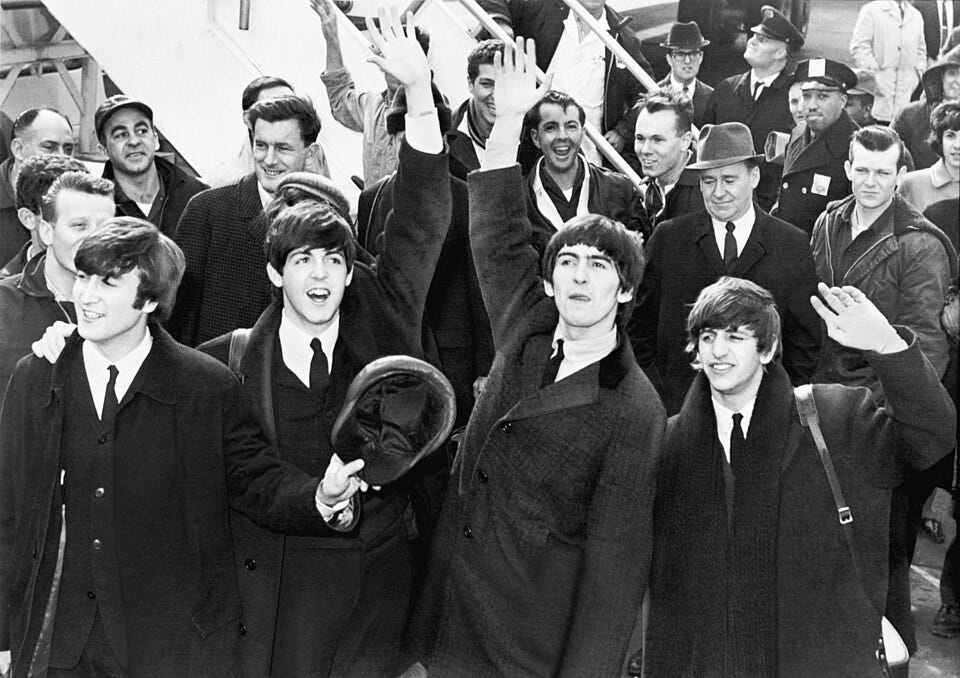
In 2021, Paul McCartney sat for a New Yorker interview. The resulting profile, written by the magazine’s editor David Remnick, was 10,000 words long and almost perfectly devoid of fresh insight. This failure, I think, was attributable less to Remnick and much more to McCartney – his long fossilised schtick might radiate a dull warmth but it has also principally served as a powerful shield to any interesting disclosure.
At the time, I wrote:
‘These days, McCartney often strikes me as the world’s least interesting man, or, perhaps more accurately, just cannily insistent on appearing like it. In conversation he’s an affable jukebox of the same dozen anecdotes and self-effacements – “I just wanted to pull birds”, “We were a neat little band” etc, etc – and even this 10,000-word New Yorker profile offered little that was new or interesting, so cleverly resistant is McCartney to presenting as anything other than dully genial. I suspect his wryly provocative line about the Rolling Stones being little more than a “blues cover band” was his calculated gift to his interviewer, knowing it would be picked up and amplified by other media, drawing attention to a profile that otherwise flatters McCartney’s legacy and confirms him as a light-hearted charmer. He was in control, as he almost always is.’
What is popularly known about McCartney, besides his melodic genius, influence upon popular music and complicated (but historically fruitful) relationship with John Lennon, is that he’s a savvy man and very often in control and it was his de facto leadership of The Beatles that so alienated the others at various stages of their brief life as a band.
This is neither an implied criticism, nor prelude for an explicit one. A genius took control. Good for him, good for us.
In Peter Jackson’s eight-part Get Back documentary series – a resurrection of the Let It Be doco via the exhumation, and improvement via AI, of the copious videotapes of director Michael Lindsay-Hogg – we see the fraught recording sessions of their penultimate album, and the sickly tension of passive-aggression and a camaraderie souring.
Their manager Brian Epstein is dead of an overdose, and their long-time producer and father-figure George Martin, fearing a catastrophe with this record, absents himself. Lennon was a Catherine Wheel of addictions and resentment; Starr’s ambitions didn’t extend much beyond the drums and groupies. As for George, well, McCartney’s condescension of him encourages a fierce resentment and, before he quits the band for a time, a sulky aloofness.
McCartney argues during these sessions that rather than his informal leadership being an expression of an intolerable ego, he’s simply filling a vacuum left by Epstein’s death and Martin’s absence (and, I’ve come to surmise, Lennon’s erraticism and drug use, Starr’s indifference to business, and Harrison’s presumed naivety).
In other words, The Beatles weren’t just a band, but a phenomenon, and it required a stable, central force to keep the ship from listing in weird and heavy weather.
Of course, both things can be (and likely are) true simultaneously: that McCartney was a perfectionist intolerant of chaos and he felt a responsibility to assert leadership in a vacuum.
Anyway, that’s all to say that, from a young age, McCartney was thinking carefully about his own image and the band’s and that’s never changed. He’s never stopped making albums or touring them, but he’s also effectively been on a half century speaking tour about his first band. Such is that band’s status that deference has never wavered, and the weirdness of its phenomenon has been made cute and sterile via our permissiveness of McCartney’s cloying geniality.
Anyway, who cares? There are worse things. I simply write this as preamble to a thought experiment I occasionally indulge: what questions would I ask Paul McCartney if given the chance? What questions do I want answered? What questions haven’t been asked in all these years? And how does one go about dodging that gifted mechanism for deflection?
And the short answer I’ve given myself in all these years is: fuck knows.
But if I can hypothetically assume McCartney’s tolerance for a series of questions inspired by a book he loathed, I think my first source would be Ian MacDonald’s Revolution in the Head – an astonishing mix of biography, social analysis and close musical criticism. Both a scholar and musician, MacDonald could write just as well on the effects of LSD on 1960s culture as he could on arpeggio guitar or novel mic techniques. His authority was further strengthened by his mix of deep admiration for his subject with an unapologetic clear-sightedness.
So, let me spit-ball some questions here (few of them original, I suspect, but that’s not the point), and offer some rationale for them. Also, let’s get serious: we need no more interviews with Sir Paul, not from me or anyone else. But I remain curious about just what the hell I would ask him, or want to ask him, were I ever to have the chance.
These are some possibilities:
* Lennon/McCartney was the consistent credit on all songs written by one or the other. I’d like to know if McCartney thought the best Beatles songs, besides George’s, were ones written in collaboration with Lennon – or in competition. Roughly speaking, during their recording history, they wrote “eyeball-to-eyeball” between 1962 and 1966. After that, as a rule of thumb, they wrote separately and brought works to the studio – sometimes as a fait accompli.
I’m certain this question, or a variation of it, has been put to McCartney before. Just as I’m sure that he’s deflected an honest reflection by genuflecting to his dead friend. McCartney’s public comments about Lennon since his murder have always sought to gently sanctify the man and note that they’d mended their relationship before he died.
But what was lost, and what was gained, by shifting from collaborators to competitors? The answer, perhaps, is in this recent Ian Leslie book which I’ve recently ordered.
* Perhaps, rather than simply finding questions from Macdonald’s book, I’d ask McCartney about his contempt for it. He’s expressed it several times over the years, though that criticism has conspicuously mellowed. Here’s McCartney discussing the book with Uncut in 2004, a year after MacDonald’s suicide:
“Well, it might be compelling reading for you. But not for me it isn’t. Because I keep finding all the mistakes in it. ‘McCartney did this because of that…’ And I’m sitting there thinking, ‘No, I didn’t.’ Or, ‘John Lennon was out of his head on this when he wrote that.’ No, he wasn’t. I should know because I was fucking there. It’s all this received wisdom shit.”
Similar criticism was expressed to Rolling Stone and Pitchfork, the latter in 2007. He said there: “You know, unfortunately [MacDonald] is no longer with us. He died, and so I don’t want to put him down. But while he was around, I must say, I would dip into that book and think, ‘See now, what’s he got to say about this song?’ And he’d go, ‘This is McCartney’s answer to—’ and I’d go, ‘No, it wasn’t!’ It was just, I just wrote a song.”
As far as I can tell, McCartney never specified his grievances with the book, and nor was he ever asked to. Because the vagueness of McCartney’s indignation always went unexamined, I’m unsure if he believes the entire book is dubious or, rather, he’s simply latched upon a few errors of fact (a chord, say) or interpretation (Lennon meant X in these lyrics) amongst an otherwise distinctive, serious and fascinating book.
McCartney never audits his grievances, and nor does he think he needs to: MacDonald, after all, is writing about his life and we might accept, after all, McCartney to be the most authoritative figure on it.
So it’s been allowed to stand: McCartney’s characterisation of MacDonald as a kind of pretentious fantasist and solemn spewer of received wisdoms. On the face of it, this seems unduly harsh. I’m sympathetic to McCartney’s frustration about his own work, and that of The Beatles, being variously transformed into mad conspiracies and commercial schlock. There’s no shortage of awful books about the group; no end to the recycling of stale myths by wickedly shallow writers.
But Ian MacDonald’s book? It’s a serious work, and quibbling about certain interpretations seems like gravy here. Is McCartney objecting to a scandalously sloppy and tendentious book – or merely the work of interpretation itself?
In other words, I wonder what percentage of the book McCartney thinks suspect, if that number is in fact quite small, and whether it has then disproportionately stained his reception of the whole book.
Who can say? Well, perhaps McCartney. So I’d ask him. But I suspect what I’d receive would be some version of the following, in which he parses the difference between “irritated” and “annoyed” and affects serene resignation to the moronic interpretations of his art: “I’m not very annoyed about it, but I suppose it’s not annoying so much as irritating when somebody gets it wrong. But what I’ve had to do over the years is just sort of think, ‘You know what, that’s their interpretation, and it’s their life, so they can interpret it however they want.’”
* Related question: You’ve spoken derisively, fairly enough, about “received wisdoms” about The Beatles. But does that make you the custodian of the truth? How zealously do you guard the public’s perception of the band? And how relaxed are you these days regarding the interpretation of your work? The Beatles have attracted parasites just as much as witless academics who make careers from pretending ant hills are mountains. But The Beatles have also inspired some great writing. How much have you read? And where was your threshold for defending your own dignity, history?
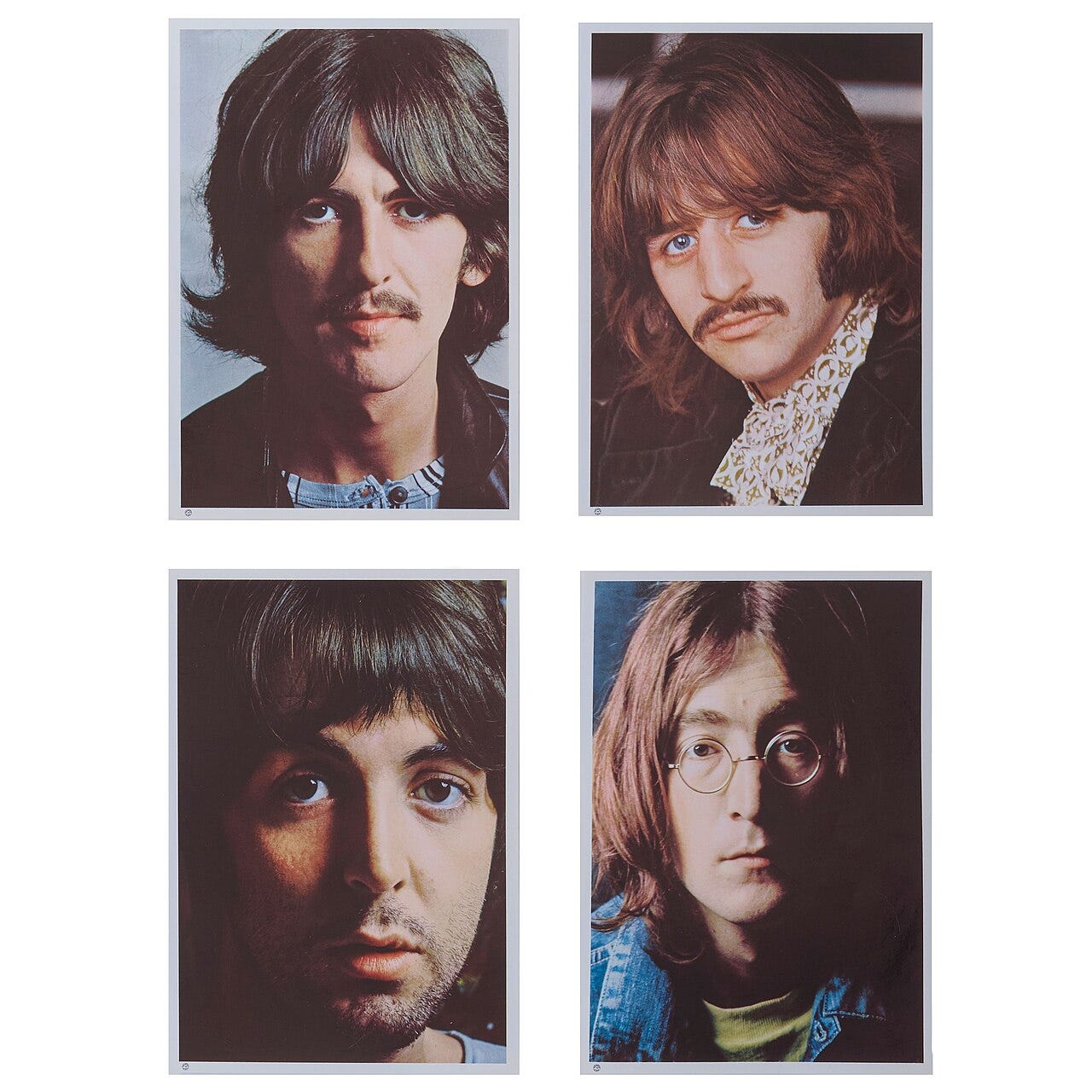
* Question: John Lennon had a sharp tongue. He could be cruel, verbally and physically. In the years after the Beatles broke up, Lennon spoke caustically about you: in song, in the press, in private. What criticisms do you now consider legitimate? And which ones weren’t?
* A follow-up question: How much were you aware of John’s history of violence – against his partners, and others? Did Cynthia ever confide in you about his abuse?
* Question: The Rolling Stones went to America in the mid-‘60s to enjoy eight-track recording there. The Beatles stayed home, and used four-track. Did you consider recording in America? What were the arguments for it? Against? And how might those mid-‘60s album have sounded if they were recorded across the pond?
* Question: Do you regret your treatment of George? His writing developed later than yours – but then a load of great songs, rejected for the last Beatles albums, were released on his first solo record. Walk me through the history of your dynamic with George – did you become more patronising older brother rather than colleague?
* Question: When the Beatles broke up, not one member had yet turned 30. The majority of brilliant, history altering and long beloved albums were made by people in their twenties. Why? How?
* Question: Towards the end of The Beatles, you and John expressed frustration with the frankly insane projections cast upon you. You inspired hysteria, and that promoted your exhaustion, fear. In different ways, you both counselled the public – the world – against taking you so seriously. In the year you broke up, John told Rolling Stone: “I no longer believe in myth, and Beatles is another myth. I don’t believe in it. The dream is over. I’m not just talking about the Beatles, I’m talking about the generation thing. It’s over, and we gotta – I have to personally – get down to so-called reality.”
Many years have passed, and The Beatles are no longer folk devils. Are you now a custodian of myth? And does it matter if you are?
*
A thought experiment, and no more. But I’d be delighted to hear any answers you might have to some of these – and to hear what questions you might put to the chap yourself.